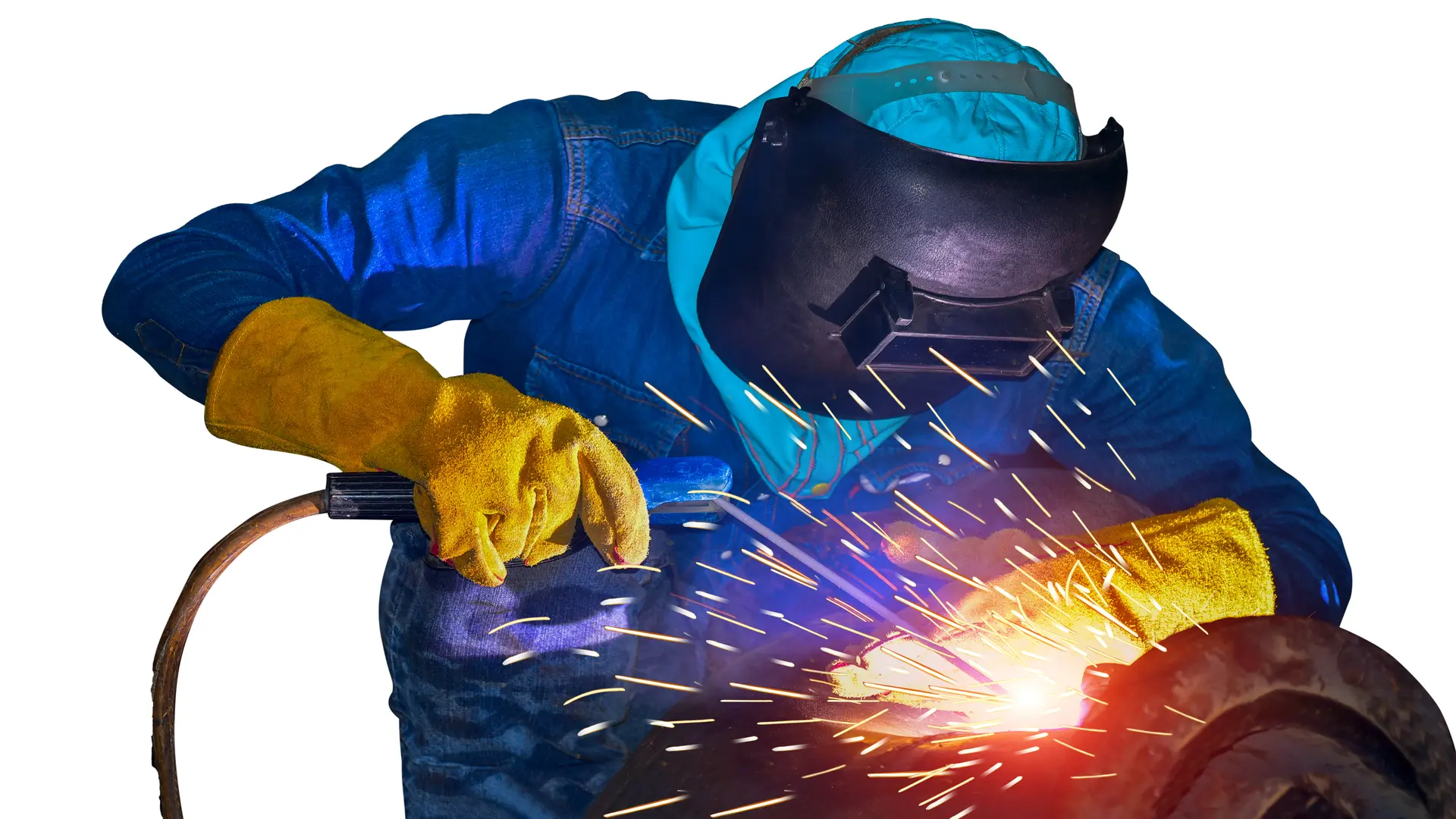
In high-reliability industries such as aerospace, energy, heavy engineering, and medical equipment manufacturing, weld integrity is directly linked to structural safety and product performance. Microscopic discontinuities may propagate to catastrophes as long as it is subjected to stress, vibration or thermal cycling.
Conventional methods of inspection tend to pay attention to open flaws and dimensional conformity whereas contemporary manufacturing complexity requires a lot deeper. With the changing materials, methods of joining, and the rate of production, the method of inspection should also improve to identify subsurface defects, metallurgical anomalies and weaknesses during the process before a product is assembled.
Advanced Welding Inspection Methods for Critical Components
Welding Inspection has evolved way beyond visual inspection and destructive testing. Modern sophisticated techniques are based on non-destructive assessment technologies which can show internal characteristics of the weld without breaking the piece. These techniques allow a porosity, absence of fusion, microcracks, and inclusions, which are not visible on the outside, but which are structurally important.
One of the most disruptive ultrasonic methods in this field is phased array ultrasonic testing. It has more probe angles and electronic beam steering unlike traditional ultrasonics, to produce high-resolution cross-sectional images of weld areas. This enables the inspectors to capture the geometry of defects accurately and evaluate the orientation of defects relative to load paths which is crucial to safety-critical assemblies.
Radiographic and Digital Imaging Advances
Digital radiography and computed tomography have also made a big difference in terms of radiographic inspection. The High-energy X-ray imaging now allows volumetric images of the weld structure, which can be used to identify voids, slag inclusions and density differences across the weld bead and heat-affected zone. The insights are especially useful when it comes to thick-section welds and complicated geometries.
Computed tomography goes a step further in recreating three dimensional internal weld morphology. The patterns of pore distribution, weld penetration consistency and also fusion line continuity can be studied by the engineers throughout the entire volume of the joint. The detail is useful in predictive modeling of failure and in attempting to correlate defects with the welding parameters including heat input and travel speed.
Metallurgical and Microstructural Evaluation Techniques
In case of critical applications, inspection is now being more and more combined with metallurgical analysis, together with non-destructive testing. To evaluate the microstructure of the surface, some techniques, like replica metallography, do not require cutting. The inspectors are able to analyze the growth of grains, phase change and the heat-affected zone properties on the component.
Extended hardness mapping and micro-indentation testing also give some information on localized changes of material strength due to welding thermal cycles. These changes usually prelude the crack initiation during cyclic loading. The correlation of hardness gradients and weld geometry and cooling rates will enable manufacturers to detect process anomalies at an early stage.
Real-Time and In-Process Inspection Technologies
The other significant change is the transition of post-production inspection to real time weld monitoring. Welding systems have sensors that monitor the stability of the arc, temperature distribution, acoustic emissions and the behavior of the melt pool in the joining process. Such indicators point to discontinuity in the fusion process or too much heat flow when it happens.
The machine learning models that are trained with the use of weld signal data can identify defect likelihood in real time. Production systems may either stop automatically or indicate a component to be inspected specifically when the deviations exceed specific limits. This minimizes scrap and eliminates the spread of defects into assemblies, as well as, it increases process capability indices significantly.
Automation and Robotics in Weld Inspection
Robotic inspection platforms are being used more on large structures including pipelines, pressure vessels and offshore structures. Weld seams are scanned by automated crawlers that have ultrasonic or electromagnetic sensors, and scan at a constant speed and contact pressure. This eliminates operator variation and enhances repeatability in long length weld.
Automation can also be used to do digital weld mapping, whereby inspection data is spatially indexed along the weld path. Engineers are able to see clusters of defects, repeated process deviations and heat distribution abnormalities on production batches. Such spatial analytics will assist in identifying roots of the problem and specific process optimization instead of generic corrective measures.
Predictive Quality Analytics and Data Integration.
Advanced inspection is not just about detection of defects but also about integrating data. Contemporary manufacturing facilities combine the output of the weld inspection with welding parameters logs, material certification and operator records. This forms a complete digital traceability system between the quality of welds and the conditions of the process.
This integrated data is used in predictive analytics models to determine the patterns of welding parameters and defect occurrence. With time, the manufacturers can establish the best parameter ranges that reduce the probability of defects in certain materials and joint constructions. This makes quality assurance not reactive but proactive.
Strategic Role in Manufacturing Process Governance
Innovative inspection processes eventually enhance systemic quality control instead of acting as checkpoints. The findings of inspection are used to improve the welding processes, the training of operators, and the calibration strategies of equipment by exposing defects due to processes and sensitivity of the parameters to changes.
When the inspection information is fed to a structured Manufacturing process audit, organizations are able to have an objective measure of process stability and capability. Audit teams are able to check on the consistency of the performance of the welding procedures within the known limits and whether corrective measures are properly taken to remove the root causes of repeated weld defects.
Conclusion
With the increasing complexity of manufacturing systems and the imposition of more strict performance requirements, traditional inspection is no longer sufficient to determine the integrity of the welds. High-tech inspection technologies offer a more in-depth structure, real-time monitoring, and data-oriented process knowledge that is consistent with the current principles of quality engineering.
Companies that incorporate modern levels of weld inspection in their wider manufacturing governance systems are more reliable, reduced rate of defect escape, and they are more compliant with international standards. The integration in the critical industries is not just a quality improvement project but is also a necessity of safety and a guarantee of long-term operation.